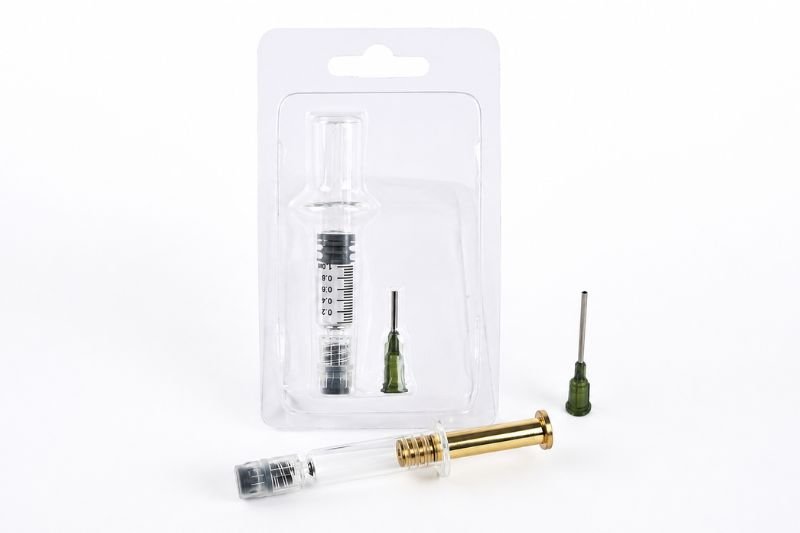
For cannabis extract processors, co-packers, brands, and packaging distributors, choosing a glass syringe is mainly a process-compatibility decision. The correct configuration depends on the extract being filled, its viscosity at the filling temperature, the target fill volume, the filling method, and the required closure or dispensing connection.
Borosilicate glass syringes are commonly used for distillate, RSO, FECO, CBD oil, and other concentrated extracts. However, barrel material alone does not determine whether a syringe will perform well in production. Luer design, plunger type, graduations, closure components, and filling format also affect filling efficiency and package performance.
This guide focuses specifically on selecting a glass syringe for commercial cannabis oil filling and packaging. Buyers comparing glass with plastic or evaluating cannabis oil syringe types more broadly should consider those questions separately.
Start With the Extract and Filling Process
A common sourcing mistake is to select a syringe from its appearance or nominal capacity before confirming how the product will actually be filled.
Before selecting a configuration, document the actual filling conditions and packaging requirements. Cannabis distillate, for example, can be highly viscous at room temperature. Processors often warm the formulation under controlled conditions before filling so that it flows more consistently.
RSO and FECO can remain substantially more resistant to flow, making plunger design and dispensing force more important. A syringe that performs well with one formulation may not perform the same way with another. Buyers should therefore evaluate the syringe with the actual extract rather than relying only on nominal specifications.
Glass Syringe Configurations by Filling Application
The table below provides practical starting points. These are not universal specifications; the final configuration should be confirmed through sample testing with the actual formulation and filling process.
| Application | Main Packaging Concern | Common Starting Point | What to Validate |
|---|---|---|---|
| Distillate packaging | High viscosity and warm filling | Borosilicate glass, secure Luer connection, suitable plunger | Filling temperature, plunger movement, leakage, residual oil |
| RSO / FECO packaging | Very high viscosity and dark extract | Borosilicate glass, higher-force plunger, high-contrast graduations | Dispensing force, graduation visibility, seal performance |
| Cartridge filling | Controlled transfer and accessory connection | Glass syringe with compatible Luer connection and blunt tip | Connection fit, dead volume, dripping, filling speed |
| Premium extract packaging | Formulation compatibility and presentation | Borosilicate glass with customized graduations, branding, or component options | Extract compatibility, print durability, shelf presentation |
| Larger-volume applications | Capacity and production efficiency | Larger syringe format selected around the filling process | Equipment fit, handling, transport packaging, fill consistency |
Why Borosilicate Glass Is Used for Cannabis Extract Packaging
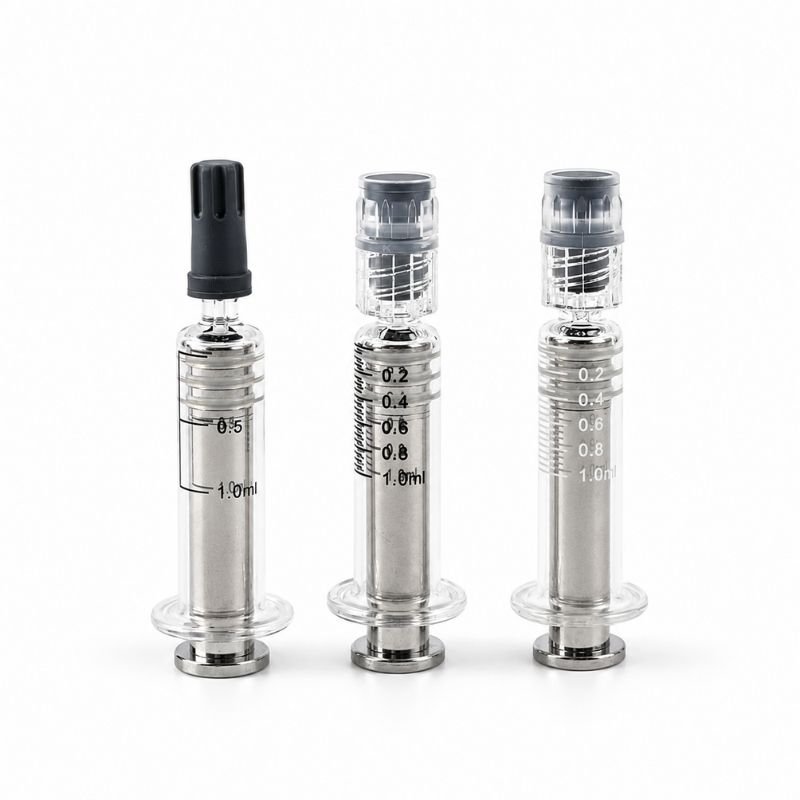
Borosilicate glass is widely used where chemical stability and heat resistance are important. For cannabis processors, this becomes particularly relevant when a viscous formulation is warmed before filling. Glass maintains dimensional stability under conditions that may be unsuitable for some plastic syringe materials.
Material interaction is another consideration. Extracts containing terpenes and other aromatic compounds should be evaluated for compatibility with all product-contact components. These include the barrel, stopper, lubricant, O-rings, cap, and dispensing accessory.
The goal is not simply to specify a “glass syringe.” Buyers should evaluate the complete syringe system that contacts the formulation.
Choosing the Right Syringe Volume
Capacity should follow the intended package format and filling process rather than a generic market rule. A 1 mL glass syringe is a common format for concentrated cannabis extracts because it provides a compact package and can support detailed graduation markings. However, it is not automatically the correct size for every project.
Noterd PFS supplies glass syringe formats from 0.5 mL to larger capacities for different packaging requirements. Larger formats can be useful when a processor needs a higher fill volume, a specialty product format, or a package intended for commercial handling rather than a standard retail unit.
When selecting capacity, confirm the target net fill, headspace requirements, barrel dimensions, plunger travel, and compatibility with the filling equipment. If a project is centered specifically on distillate packaging, the Empty Distillate Syringes Wholesale Buyer’s Guide provides a deeper comparison.
Luer Lock or Luer Slip?
The Luer connection affects both filling operations and closure security.
A Luer Lock uses a threaded connection. It is generally preferred when a more secure connection is required. This is useful when handling viscous extracts or minimizing leakage during filling and distribution.
A Luer Slip uses a tapered push-fit connection. It is preferred in workflows where speed of connection is more important than locking strength. For cartridge-filling operations, buyers should evaluate the syringe together with the actual filling tip or accessory.
Do not select the Luer style only from appearance. Test it as part of the complete filling setup.
Plastic Plunger or Metal Air-Release Plunger?
Plunger design becomes more important with highly viscous extracts. Standard plastic-plunger configurations can work well when plunger resistance remains acceptable, while some processors prefer a more rigid metal-plunger configuration for higher-resistance applications.
Certain metal-plunger designs also allow air release during filling. A metal air-release plunger should not be specified automatically for every project. It can affect component cost, assembly requirements, appearance, and the filling procedure.
Graduations Should Match the Packaging Requirement
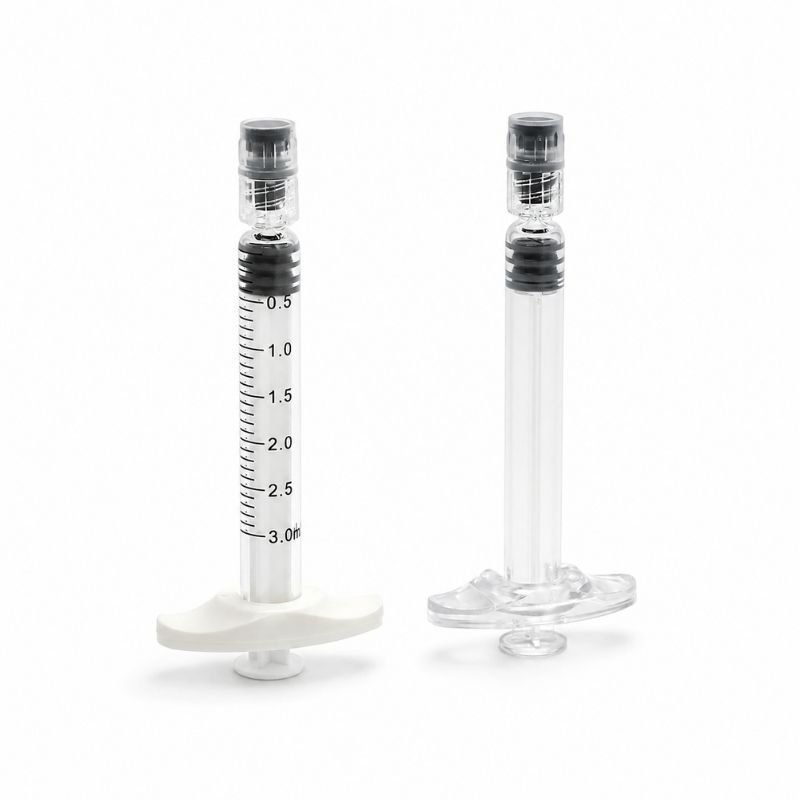
Graduation markings are not only visual features. They support fill verification, product presentation, and measurement requirements. For dark extracts, high-contrast markings improve visibility. For light oils, standard contrast may be sufficient.
More markings are not always better. Some products prioritize consistency over detailed measurement scales.
Consider How the Syringes Will Be Supplied to the Filling Line
How syringes are supplied can affect assembly time, line handling, labor requirements, cleanliness control, and overall filling efficiency. Options may include separate components, partially assembled units, fully assembled syringes, or organized nest-and-tub formats. The appropriate format depends on production volume, filling equipment, assembly workflow, and cleanliness requirements.
Before requesting a quotation, buyers should confirm how the syringes need to arrive at the filling facility and which assembly steps will be performed before filling.
Validate Samples Before a Production Order
Buyers should test samples with the actual formulation and, where possible, under the intended filling conditions. Key evaluation points include:
- Filling speed and consistency
- Plunger resistance and movement
- Leakage at the tip, cap, or plunger
- Air-bubble formation
- Residual extract after dispensing
- Compatibility with filling tips or equipment
- Graduation visibility
- Closure security after filling
- Assembly requirements
What Packaging Distributors Should Confirm Before Quoting
Packaging distributors should confirm the extract type, approximate viscosity, filling temperature, target fill volume, Luer configuration, preferred plunger, filling method, customization requirements, and estimated order quantity before requesting a supplier quotation.
This helps ensure that quotations from different suppliers are based on comparable syringe configurations rather than technically different products.
Sourcing Glass Syringes from Noterd PFS
Noterd PFS supplies empty borosilicate glass syringes for commercial cannabis extract filling and packaging.
For new projects, send us your application details to receive recommended syringe configurations, sample options, and a wholesale quotation.